


Increase sugar-sweetened beverages tax to curb rising NCDs, NGOs urge FG
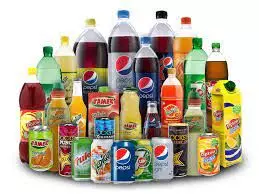
Some Non-Governmental Organisations (NGO) have called on the Federal Government to increase the excise duty on Sugar-Sweetened Beverages (SSB) from N10 per litre to N130 per litre to curb rising Non-Communicable Diseases (NCDs).
The Corporate Accountability and Public Participation Africa (CAPPA), Global Health Advocacy Incubator (GHAI) and other public health experts, made the call at the Media Roundtable on SSB Tax in Abuja on Tuesday.
The Executive Director of CAPPA, Mr Akinbode Oluwafemi, recalled that In 2021, the Federal Government reflected on the problem and introduced the SSB tax, imposing a token N10 per litre excise duty on all non-alcoholic, sweetened, and carbonated drinks.
According to Oluwafemi, this policy was envisioned as a pro-health measure to discourage excessive consumption of SSBs, reduce public addiction to sugary drinks, and stem the rising tide of NCDs.
“Sadly, the N10/litre tax is and has always been inadequate. At the time, a 33cl bottle of SSB cost about N150. Since three bottles make up one litre, the tax per bottle was about N3.33 — a negligible two per cent price bump, far too weak to deter consumption.
“Today, with bottles priced above N300, this tax now amounts to barely one per cent of the price, failing to shift market behaviour or improve public health outcomes.
“Evidence from global health research is unequivocal: to achieve public health objectives, health taxes must raise retail prices by at least 20–50 per cent.
“Nigeria’s N10/litre levy is insufficient to influence consumer behaviour meaningfully; it does not even graze the surface of the problem. It cannot work effectively unless it is revised upward.’’
The CAPPA chief urged President Bola Tinubu to strengthen the SSB tax and ensure its transparent implementation as part of his duty to protect the health and future of all Nigerians.
“At N10 per litre, the current SSB tax rate amounts to just one per cent of the average retail price, which is at least N1,000 per litre of sugary drinks sold in the country. This is too minimal to influence consumer behaviour.
“According to global best practices and the World Health Organisation (WHO), effective health taxes should lead to at least a 25 per cent increase in the retail price of sugary drinks.
“Just last week, the WHO advised Nigeria and other member countries to raise the prices of alcohol and tobacco by 50 per cent through taxation over the next 10 years to help curb rising NCDs.
“Similarly, Bloomberg’s Taskforce on Fiscal Policy for Health, which includes Nigeria’s Minister of Health and Social Welfare, Professor Muhammad Ali Pate, also recommends a 50 per cent price increase to reduce consumption and prevent NCDs.’’
“Beyond health concerns, Nigeria is missing out on valuable revenue. A stronger and better-structured SSB tax has the potential to generate over N200 billion each year.
Oluwafemi said these funds could directly support Nigeria’s goal of increased healthcare financing, including the Basic Healthcare Provision Fund, the National Health Insurance Authority, and school feeding programmes — helping to build a healthier and more equitable society.
According to him, other countries have shown what is possible when governments take bold action. South Africa, Mexico, and the United Kingdom have all raised their SSB taxes significantly.
“In each case, consumption declined while jobs and revenue were protected. Nigeria must follow suit. The moment to act is now.’’
Mrs Joy Amafah-Isaac, In-Country Coordinator, Food Policy Programme, GHAI, said her organisation was advocating health policies to reduce deaths and diseases.
Amafah-Isaac, who said one of its critical advocacy pillars was monitoring and countering of industry tactics, uncovered some industry deceptive tactics toward weakening SSB policies.
She alleged that the industry deceptive tactics toward weakening policies and derailing conversations around public health, mostly centred around protecting their brand and their profits.
“They sponsor sporting events, and try to skew scientific research and data. They even try to manipulate tax policies to favour their interests.
“They often derail the SSB tax agenda and help advocates around the globe begin to recognise this trend, and are now urging governments to take the stand.’’
Also speaking, Dr Joseph Ekiyor, Global Health Practitioner and Researcher, described the soft drinks, sweets and cakes and the biscuits as unhealthy food.
Ekiyor said, “once you take them, they go directly to the bloodstream and cause blood sugar spikes. And then that can be a problem.
“Repeated blood sugar spikes over time is the reason why people become sick with non-communicable diseases. This would include the likes of diabetes and hypertension, cardiovascular disease.’’