


Health sovereignty is Africa’s path to spatial justice, says expert
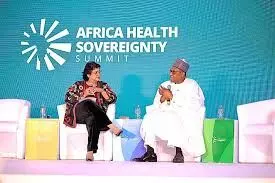
Prof. Youns Bjijou, Deputy Director of the Mohammed VI Foundation for Science and Health, Morocco, asserts that health sovereignty is no longer a technical aspiration but a political and social necessity for Africa’s stability, cohesion, and dignity.
Bjijou made this assertion in his keynote address at the opening of the 9th General Assembly of the Atlantic Federation of African Press Agencies (FAAPA) on Wednesday in Marrakech, Morocco.
Delivering the keynote on Health Sovereignty as a Foundation of Spatial Justice, Bjijou argued that inequitable access to healthcare remained one of the clearest expressions of spatial injustice on the continent.
This, according to him, reinforces divides between urban centres and rural or peripheral territories.
“The territory is not just an administrative or geographic space, it is where dignity is expressed, where identity is rooted, but also where painful fractures are revealed,” he said.
The health expert painted a stark picture of Africa’s health burden, noting that the continent carried a disproportionate share of global diseases while remaining heavily dependent on imports for medicines and vaccines.
According to him, Africa imports between 70 and 80 per cent of its medicines and nearly 99 per cent of its vaccines.
He described this as a vulnerability that undermined “continental security.”
“Sovereignty in health is the key to Africa’s security. Africa must become an actor capable of defining its own public health priorities,” Bjijou said.
He stressed that spatial justice in health went beyond infrastructure, requiring proximity, equity, and trust between citizens and institutions.
“To speak of spatial justice is to ask a fundamental question: the dignity of every citizen in access to public services,” he said.
He added that health should be treated “as a strategic investment, not a budgetary burden.”
Bjijou highlighted Morocco’s health reforms as a practical illustration of how territorial equity could be embedded into national policy.
Under the leadership of King Mohammed VI, he said, Morocco had restructured its health system around proximity care, compulsory health insurance, territorial health groupings, and strong governance mechanisms.
He said this was designed to reduce medical deserts and standardise care quality across regions.
“The citizen has been placed at the centre of the reform, with equity of access and real proximity,” he said, noting that universal health coverage now applied “regardless of where one lives.”
He said the Mohammed VI Foundation for Science and Health, created by law in 2023, complements public health efforts by combining care delivery, training, and research under an agile governance model with a clear public service mission.
Through institutions such as the Mohammed VI University of Health Sciences and a growing network of hospital-university complexes across Morocco, he said, the foundation was investing in human capital, innovation, and applied research as pillars of long-term sovereignty.
Bjijou also underscored the continental ambition of the African Academy of Health Sciences, headquartered in Dakhla, Morocco.
He described it as a platform to converge expertise, train future leaders, and translate research into concrete African solutions.
“We must move from knowledge production to action,” he said, recalling the Dakhla Declaration as a roadmap for “Africans, by Africans, for Africans.”
Turning to the media, Bjijou challenged African news agencies to go beyond reporting reforms to making their impact visible.
“Your role is to connect public decisions to lived realities. It is not enough to announce a reform; you must show how it transforms the life of a family in an enclave territory,” he said.
The medical expert described the media as “actors of cohesion” capable of restoring trust, countering crisis-driven narratives, and supporting citizen ownership of major reforms.
“You are translators of policy, facilitators of appropriation, and builders of confidence,” he said.
Bjijou, however, called for what he termed a “renaissance sanitaire africaine,” rooted in territorial centrality, shared expertise, and strong partnerships with the media.
“Giving voice to territories is refusing marginalisation. Building health sovereignty is refusing dependence,” he concluded.