


NGO urges protection for Ebonyi mining communities
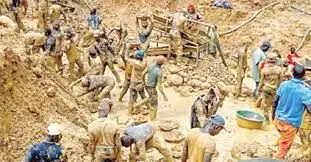
The Community Development Advocacy Foundation (CODAF), a Non-Governmental Organisation (NGO), has called for urgent action to protect the rights of mining host communities in Ebonyi.
Mr Richard Benin, Executive Director of CODAF, made the appeal alongside its partners; the Environmental Defenders Network (EDEN) and the African Just Transition Network (AJTN) at a one-day validation workshop on Monday in Abakaliki.
Benin explained that the workshop aimed to review and validate the findings of a recent research report conducted in selected mining communities across Ebonyi.
Supreme news reports that discussions at the workshop centred on findings from CODAF’s study in Ezillo and Ikwo Local Government Areas.
Supreme news further reports that mining activities in the state are prominent in communities across Afikpo, Ishiagu, Ikwo, Ohaukwu, Edda, and Ishielu Local Government Areas, among others.
The executive director urged the Ebonyi government to strengthen its monitoring mechanisms and enact policies to curb indiscriminate mining activities that threaten the wellbeing of host communities.
Ms. Melody Enyinnaya, CODAF’s Programme Manager on Environment, condemned the continued violation of the Community Development Agreement (CDA) by mining companies operating in the state.
She expressed concern over the environmental degradation caused by these companies, noting that their activities have polluted water sources, air, and soil, severely affecting the health and livelihoods of indigenous communities.
“The companies’ operations have left local residents in pain. Their water, air, and soil are polluted, their means of livelihood destroyed, and homes have developed cracks due to constant blasting.
“Yet, there has been no compensation or reclamation of abandoned mining sites, leaving many families in a state of mourning.
“There is also a growing risk of lead poisoning from chemical effluents leaking into the environment. This can lead to serious health complications, including damage to the brain, nervous system, kidneys, and cardiovascular system.
“There is an urgent need for post-impact assessments in all mining communities, so that the voices of affected groups can be heard and necessary action taken,” she added.
Dr Chukwudi Emeribe, a lecturer and researcher at the University of Benin, Edo, explained that lead poisoning results from the gradual accumulation of lead in the body.
“This often occurs through exposure to contaminated water, lead-based products, or polluted air. It can happen via ingestion, skin contact, or inhalation.
“Children, women, and young people are the most vulnerable, with many suffering from conditions such as tuberculosis, kidney disease, lung cancer, chronic cough, and catarrh due to prolonged exposure in these environments,” he said.
Mr Amos Ogodo, a resident of Ndiagu-Obu, Ngbo, in Ohaukwu Local Government Area; one of the communities most affected by mining operations in Ezillo lamented the destruction caused by mining in their area.
“We no longer have access to clean drinking water. Our farmland yields have dropped, and the roads are in poor condition. We are appealing to the government, NGOs, and well-meaning individuals to intervene,” he said.
Supreme news recalls that the state government, through the Commissioner for Solid Minerals Development, Mr Chidi Onyia, has previously urged mining companies to adhere strictly to the CDA and to improve their corporate social responsibility.
In 2024, the state government sealed four mining companies operating in Afikpo and Ishielu Local Government Areas for failing to comply with CDA provisions.