


FEATURE: Solidarity: Are women senators together?
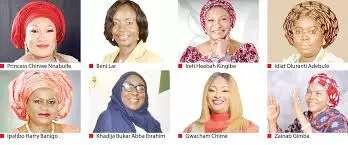
When a motion on the plight of Nigerian women languishing in Libyan prisons came before the Senate recently, the nation witnessed an unsettling silence.
It was not from the men in the Red Chamber but from the very women whose voices should have resonated most.
On Oct. 14, Sen. Natasha Akpoti-Uduaghan (Kogi Central), had moved a motion seeking the intervention of the government in the reported abuse and sexual exploitation of Nigerian female inmates in Libyan prisons.
The senator, visibly emotional, urged her colleagues to mandate the Nigerian Immigration Service to liaise with Libyan authorities for the repatriation and rehabilitation of these victims.
But when the Senate President Sen. Godswill Akpabio called for a seconder, no female senator rose in support.
The silence was deafening. It lingered long enough to cause discomfort in the chamber until Senate Leader Opeyemi Bamidele (Ekiti Central) –a man– stood to second the motion, saving it from dying on arrival.
That moment, though fleeting, spoke volumes about the state of women’s solidarity and representation in nation’s politics.
During a pre-pageant “sashing” event in Bangkok, the Thai organiser, Nawat Itsaragrisil, publicly berated the Mexican contestant, Fátima Bosch (Mexico), accusing her of refusing to participate in a promotional shoot and calling her “dumb”.
The incident was live-streamed and triggered a walk-out by Bosch and several other contestants, including the reigning queen, Victoria Kjær Theilvig of Denmark.
The organiser had to apologise and the pageant’s management intervened.
In a world where beauty queens from across continents recently demonstrated unity and courage walking out in protest when one of their own, Miss Mexico, was publicly humiliated at the 2025 Miss Universe pageant in Thailand.
It is disheartening that Nigeria’s female legislators could not show a fraction of such empathy.
“If women in beauty pageants can rise for one another without boundaries of nationality, then what excuse do women in power have for staying silent when their own are suffering?” asked a Lagos-based gender advocate, Mrs Tolu Abisogun, in an interview.
According to data from the National Assembly, the 10th Senate, inaugurated in June 2023, has only four female senators out of 109 members representing 3.7 per cent.
In the House of Representatives, there are 17 women out of 360, translating to just 4.7 per cent. Together, women make up less than 5 per cent of the National Assembly one of the lowest in sub-Saharan Africa.
By comparison, Rwanda’s parliament comprises 61 per cent women, South Africa’s 46 per cent, and Senegal’s 43 per cent.
Nigeria’s gender representation, experts say, not only falls short of the African Union’s 30 per cent affirmative action benchmark but reflects a deep structural imbalance, a critic observes.
She observes further that the few women who made it to the National Assembly often fail to leverage their positions to amplify women’s concerns.
“The issue is not just about numbers anymore. It’s about consciousness the will to act when it matters,” noted political analyst, Dr Suliman Aliu.
“We cannot continue to clamour for more women in leadership if those already in power remain indifferent to the struggles of less privileged women,” he said further.
Among the four female senators in the 10th Assembly are Sen. Ireti Kingibe (Labour Party – FCT), Sen. Idiat Adebule (APC – Lagos West), Sen. Ipalibo Banigo (PDP – Rivers West), and Sen. Natasha Akpoti-Uduaghan (PDP – Kogi Central).
Of the four, only Natasha has consistently raised motions and debates focused on women’s rights, gender-based violence, and rehabilitation of vulnerable citizens.
Observers say the absence of solidarity from her female colleagues that day was symbolic of a wider disconnection between Nigerian women in power and those at the grassroots.
“It’s heartbreaking that when the chips are down, women in privileged positions often forget that they are standing on the shoulders of other women,” said Mrs Lilian Brendan a civil society activist. “Representation means nothing if it does not translate to advocacy.”
“In the 9th Senate (2019–2023), there were eight female senators. The number dropped to four in the 10th Assembly is more than a statistical decline, it is a regression in political inclusivity,” she observed.
According to her, the situation has also worsened at the state level, where only 45 out of 991 legislators across Nigeria’s 36 states are women.
Meanwhile, outside the political space, women in various sectors continue to display courage and unity, concerned women observe
From entrepreneurs mentoring start-ups to community leaders driving social change, Nigerian women are proving their worth — except, it seems, in the very space where laws affecting their lives are made, they claim.
“As 2027 approaches, gender advocates are calling for a collective rethink.
“It is time to hold female politicians accountable the same way we hold their male counterparts.
“We must support women who will not only seek office but use that office to defend women’s dignity, welfare, and representation. We must support women,” Abisogun said.
“Beyond criticism, the call is also for women across professions to build structured support systems from funding credible female candidates to forming mentorship networks for young women aspiring to leadership.
Observers note that the silence that day in the Red Chamber may have passed, but its echo lingers — a reminder that the fight for women’s inclusion in governance is not just about seats occupied, but voices heard.
This high-profile display of empathy and collective action among pageant contestants stands in sharp contrast to what happened in the Senate chamber that day, observers note further.