


2023: UN issues new hunger warning for West, Central Africa
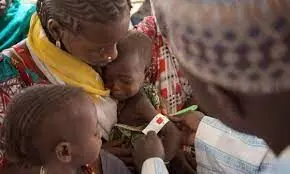
The UN agencies say the number of hungry people in West and Central Africa can reach a record high of 48 million in 2023, which should serve as a final "wake-up call" for regional governments to act now.
Three UN agencies- the Food and Agriculture Organisation (FAO), the UN Children's Fund (UNICEF), and the World Food Programme (WFP)- disclosed this in their assessment published on Thursday.
According to the agencies, more than 35 million people, including 6.7 million children, are currently unable to meet their basic food and nutrition needs.
They noted that the numbers could rise unless urgent and long-lasting solutions to address the crisis are not delivered soon, they warned.
The situation is particularly worrying in the Liptako-Gourma tri-border region between Burkina Faso, Mali, and Niger, where 25,500 people will experience catastrophic hunger during the June-August lean season next year.
"The food and nutrition security outlook for 2023 is extremely worrying and this should be the last wake-up call for governments of the region and their partners,"Chris Nikoi, WFP's Regional Director for Western Africa Region, said.
"Strengthening the resilience of communities has to become a singular and collective focus for us all if we are to pull this situation back from the precipice before it is too late," he added.
The UN agencies have urged governments across the region to ramp up support and investments in food security and nutrition programs.
Despite factors such as good harvest prospects and favorable local cereal production estimates, food insecurity and malnutrition persist and are spreading from the Sahel towards coastal countries.
The crisis is driven by persistent insecurity, climate shocks, high food prices, the economic fallout from the COVID-19 pandemic, and the impact of the war in Ukraine.
Across Benin, Côte d'Ivoire, Ghana, Guinea, Guinea-Bissau, Liberia, Sierra Leone, and Togo, the analysis reveals a 20 percent increase in food insecurity in the last quarter of the year compared to the same period in 2021.
The vast Sahel region stretching west to east across the continent is "teetering on the brink of full-blown catastrophe," according to Robert Guei, FAO's Sub-regional Coordinator for West Africa.
"In most countries, food availability is declining and fertilizer prices are rising."
He said this could have a negative impact on harvests in 2023 and worsen an already grave situation for many rural communities, noting that we must act now to shore up rural livelihoods before it is too late.
According to him, vulnerable women and children from the Lake Chad islands are now living in a displaced persons camp in West Chad.
The UN partners added that acute malnutrition in children under five is a concern, particularly in Sahel countries and in Nigeria.Rates are exceeding the 15 percent emergency threshold in some areas of Senegal, Mauritania, northeastern Nigeria, and Niger.
The global acute malnutrition rate also exceeds 10 percent in many areas around the Lake Chad Basin, which encompasses Niger, Nigeria, and Chad, as well as the border areas between Burkina Faso, Mali, and Niger.
Factors such as conflict, displacement, and limited access to healthcare and other basic services are among the underlying causes of acute malnutrition in children under five, pregnant women, and nursing mothers across the region.
Marie-Pierre Poirier, UNICEF Regional Director for West and Central Africa, reported that the latest data indicates continuing unacceptably high levels of severe wasting for children in many countries.
"We need to scale up treatment and put much more attention on preventing child malnutrition through a multi-sectoral approach to reach every child," she said.
The UN agencies and their partners are committed to addressing this unprecedented food and nutrition crisis through what they called "a robust food systems approach."
This involves multiple and integrated programs that provide food, nutrition, health, water, hygiene, and sanitation responses, targeting children, women, and other vulnerable groups.
They will reinforce and expand ongoing support to national social protection systems that are responsive to shocks and sensitive to nutrition for pregnant women, nursing mothers, young children, and adolescents.
Building on existing systems at local, national, and regional levels, the agencies will also scale up their medium- to long-term solutions aimed at reinforcing the resilience of crisis-affected communities while supporting peacebuilding and peaceful coexistence.