


Mechanisation, security key to food output, inflation control –
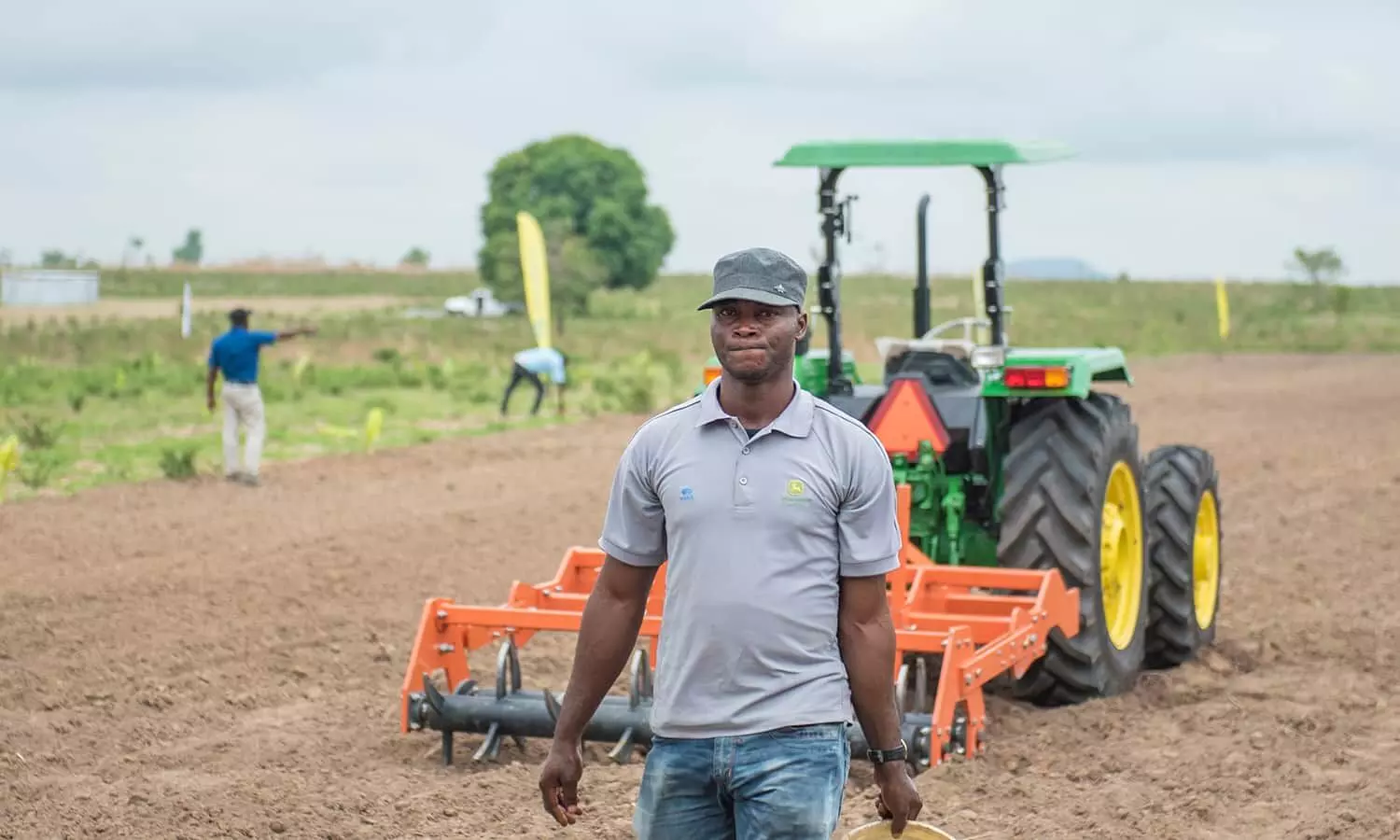
Prof. Kenneth Ife, president, Institute of Professional Economists and Policy Management (IPEPM), says the Federal Government can boost food production and curb food-driven inflation by deploying tractors to farming settlements nationwide.
Ife said this in an interview with newsmen on Tuesday in Lagos.
He said that widespread deployment of tractors would accelerate farm mechanisation, expand cultivated acreage and improve yields.
According to him, mechanising existing farms remains one of the fastest ways to increase food output and stabilise prices.
“The government must ensure that the tractors are deployed across farming settlements to mechanise agriculture and boost output,” Ife said.
He explained that improved security across agrarian communities was equally critical to sustaining food production, noting that many farmers still faced threats that hindered harvesting and processing.
“Many agrarian areas are still contending with insecurity, despite the decline in food prices in the hinterland.
“This is one of the major challenges confronting farmers, aside from the exorbitant cost of transportation,” he said.
Ife also noted a rise in grassroots innovation, as more Nigerians increasingly embraced small-scale farming solutions.
“More people are now planting, especially tubers, in sack bags within their homes and gardens.
“No fewer than 9,000 sack bags can be accommodated on one hectare, and these can be harvested twice a year,” he said.
He attributed the growing interest in local production to the depreciation of the naira, which had made imported food items unaffordable for many households.
“Since the depreciation of the currency, people are now sourcing local alternatives because imported commodities have become too expensive,” he noted.
Ife added that recent foreign exchange stability had helped restore confidence in the economy.
“The current foreign exchange stability has led to increased inflows, and people who usually hoard dollars are now selling them,” he said.
Similarly, the Chief Executive Officer of African Farmers Hub, Mr African Farmer Mogaji, said increased private participation in farming would naturally help reduce food inflation.
However, Mogaji warned that rising costs of farm inputs were making farming increasingly unsustainable for many operators.
“More people are now engaged in farming, which should reduce food inflation.
“However, it is becoming unsustainable for many farmers due to the arbitrary cost of farming inputs,” he said.
Mogaji commended government efforts to support farmers but urged stronger coordination among relevant ministries.
“The Ministry of Agriculture should collaborate more with the Ministry of Trade and Investment.
“This will help secure equipment for preservation and value addition, ensure standards are met and facilitate export of farm produce, thereby reducing post-harvest losses,” he said.
Meanwhile, data from the National Bureau of Statistics (NBS) indicate easing inflationary pressures.
The Consumer Price Index (CPI) declined to 14.45 per cent in November from 16.05 per cent in October, according to the NBS.
On a year-on-year basis, headline inflation stood at 20.15 per cent in November, compared with 34.60 per cent in November 2024 after rebasing.
The NBS, however, said month-on-month headline inflation rose slightly to 1.22 per cent in November, up from 0.93 per cent in October, attributing the sharp drop in annual food inflation largely to changes in the base year.